Openers
Is your opener actually broken?
Pull the release and lift the door by hand. What happens next tells you where the fault really is.
· 5 min read · Garage Doors
The short answer
The short answer
Pull the emergency release with the door closed and lift the door by hand. If it rises smoothly and holds itself at halfway, the door is fine and the fault is in the opener. If it is heavy, drifts, or binds, the opener was never the problem — it has been straining against a door it was not designed to lift, and fixing the door usually saves the opener.
The one-minute test
With the door fully closed, pull the red release cord to disconnect the opener, then lift the door by hand. A healthy, balanced door lifts with modest effort, moves smoothly the whole way, and stays put when you let go at halfway.
Do this with the door closed, not open. Releasing an unbalanced door in mid-air hands you its full weight without warning, and a badly under-sprung door can drop fast. Closed, the worst case is that it is simply heavy and you set it back down.
That one lift splits the whole diagnosis. Heavy or drifting: the door side — springs, balance, friction. Light and smooth: the opener side. Everything after this is detail.
If the door is heavy, it was never the opener
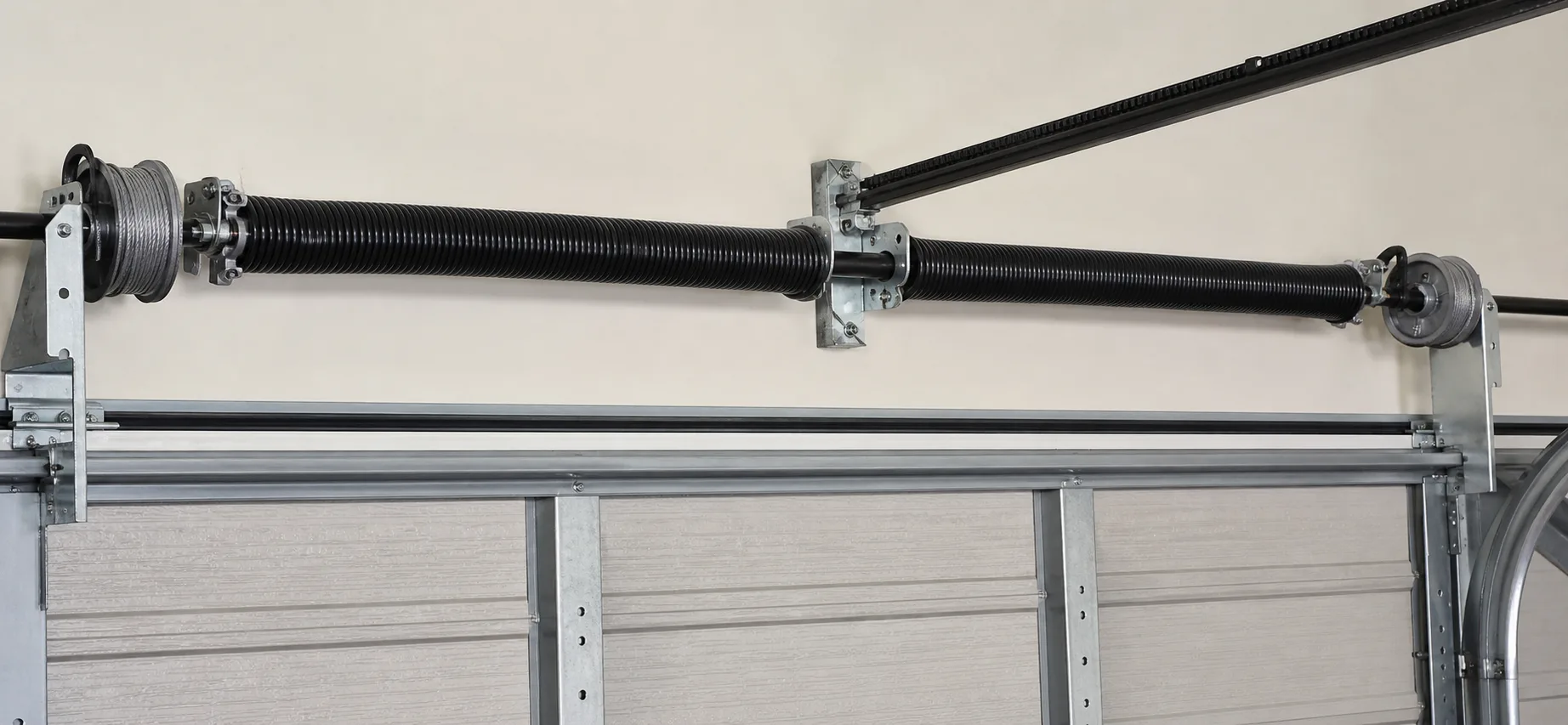
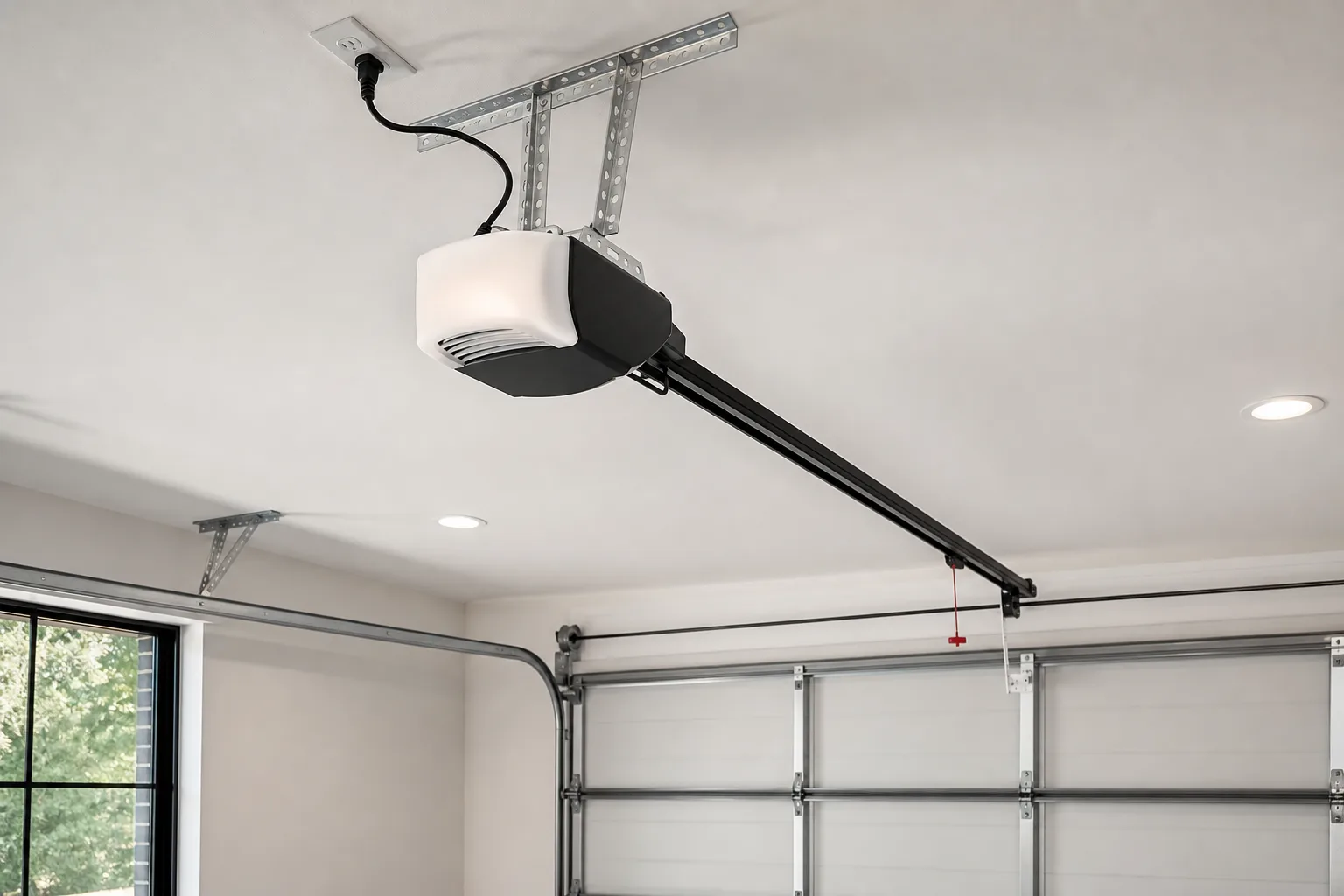
An opener is not a hoist. The springs carry the door's weight; the opener supplies guidance and the last little push. Ask it to lift real weight — because the springs have sagged or one has broken — and it strains, slows, and overheats.
The classic tell is the opener that quits and then fixes itself ten minutes later. That is the motor's thermal cutout: it overheats under the load, shuts down to protect itself, and resets when it cools. People replace openers over this constantly, and the new opener inherits the same heavy door and the same fate.
If the door is light, here is what actually fails in openers
Chain-drive openers most often strip the main drive gear — a nylon gear that gives up after years of load, leaving the motor spinning while nothing moves. It fails faster when the door is heavy, which is how door problems become opener problems. A gear kit is a standard, economical repair.
After that: logic boards, usually after a storm or a power surge; the RPM sensor, which makes an opener run briefly and stop; and the trolley, which wears until it will not hold the rail. All are parts, all are replaceable, and all cost a fraction of a new unit on a machine otherwise worth keeping.
When replacement is the honest answer
An opener with no photo-eyes predates the 1993 safety requirement, and no repair brings it up to that standard — that one we recommend replacing regardless of what else is wrong. Likewise a unit whose parts are no longer made.
If you are replacing anyway: belt drives run noticeably quieter than chains, worth having when a bedroom sits above the garage; rolling-code security has been standard since the mid-1990s; and battery backup keeps the door usable in an outage — some states now require it on new openers. None of this is exotic. It is what a mid-range opener includes now.
My opener hums but the door does not move. What is that?
Either the drive gear has stripped — the motor turns, the gear's teeth are gone, and a fine plastic dust inside the housing confirms it — or the trolley was released and is no longer engaged with the rail. One is a parts repair; the other is just reconnecting it.
How do I reconnect the trolley after pulling the release cord?
On most openers, run it once: the trolley clicks back in when the carriage reaches it. Some need the cord pulled toward the opener first to reset the latch. Either way, do it with the door closed.
How long should an opener last?
Ten to fifteen years is a fair run, and the door's condition sets which end you hit. An opener that spends its life moving a balanced door barely works; one that spends it dragging a heavy door dies young. Servicing the door is opener maintenance.
Keep reading
More from the blog.
Why we replace both springs
Springs are rated in cycles and installed as a pair. Replacing one guarantees a second call.
Read the postWhy your door reverses before closing
Misaligned sensors and drifted force settings account for nearly every reversal. Both are adjustable.
Read the postAll garage door services
What we do, what it costs, and how each visit actually goes.
Browse servicesNeed Help With Your Garage Door?
Whether it’s a broken spring, off-track door, faulty opener, or anything in between, our 15+ years of experience allows us to pinpoint the problem fast—offering honest solutions and upfront pricing every time.