Springs
Why we replace both springs
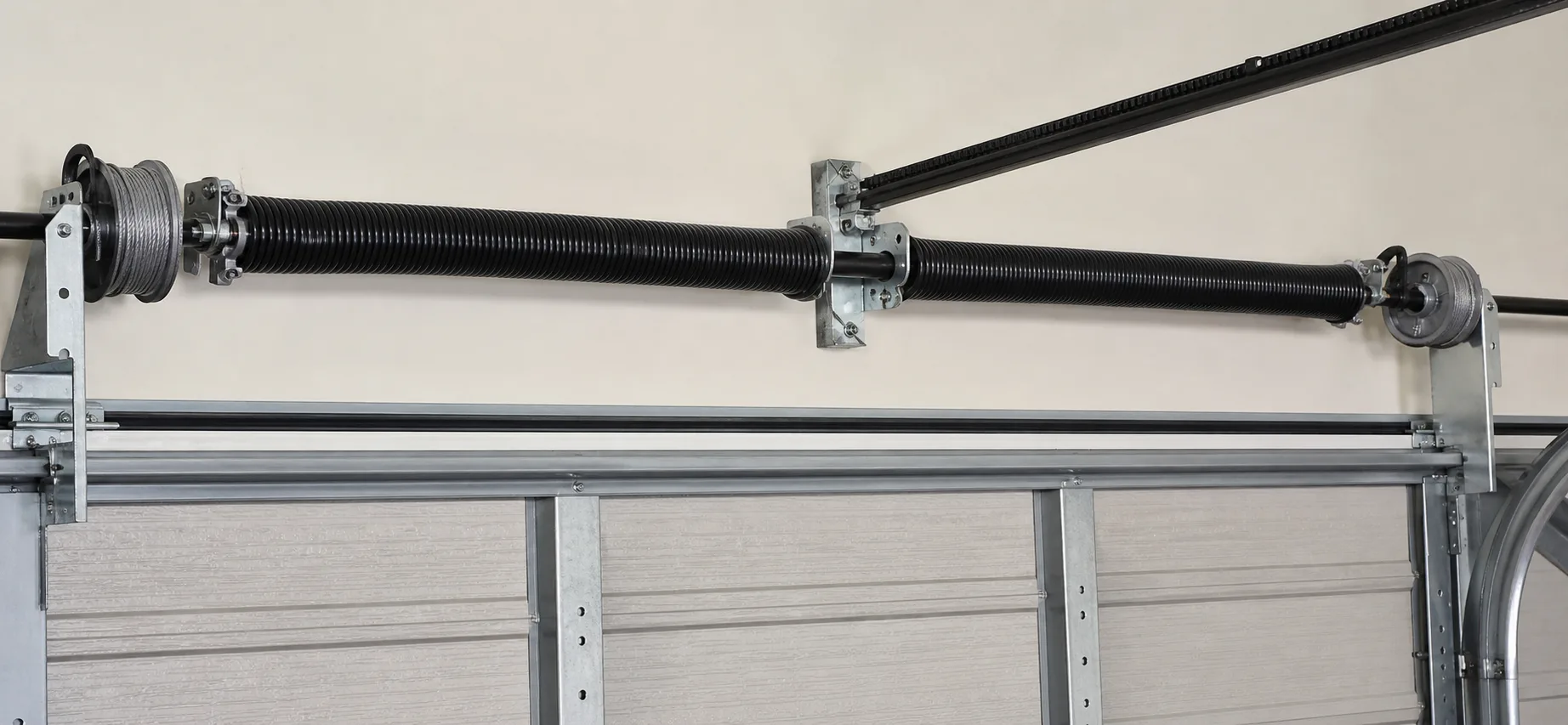
Springs are rated in cycles and installed as a pair. Replacing one guarantees a second call.
· 5 min read · Garage Doors
The short answer
The short answer
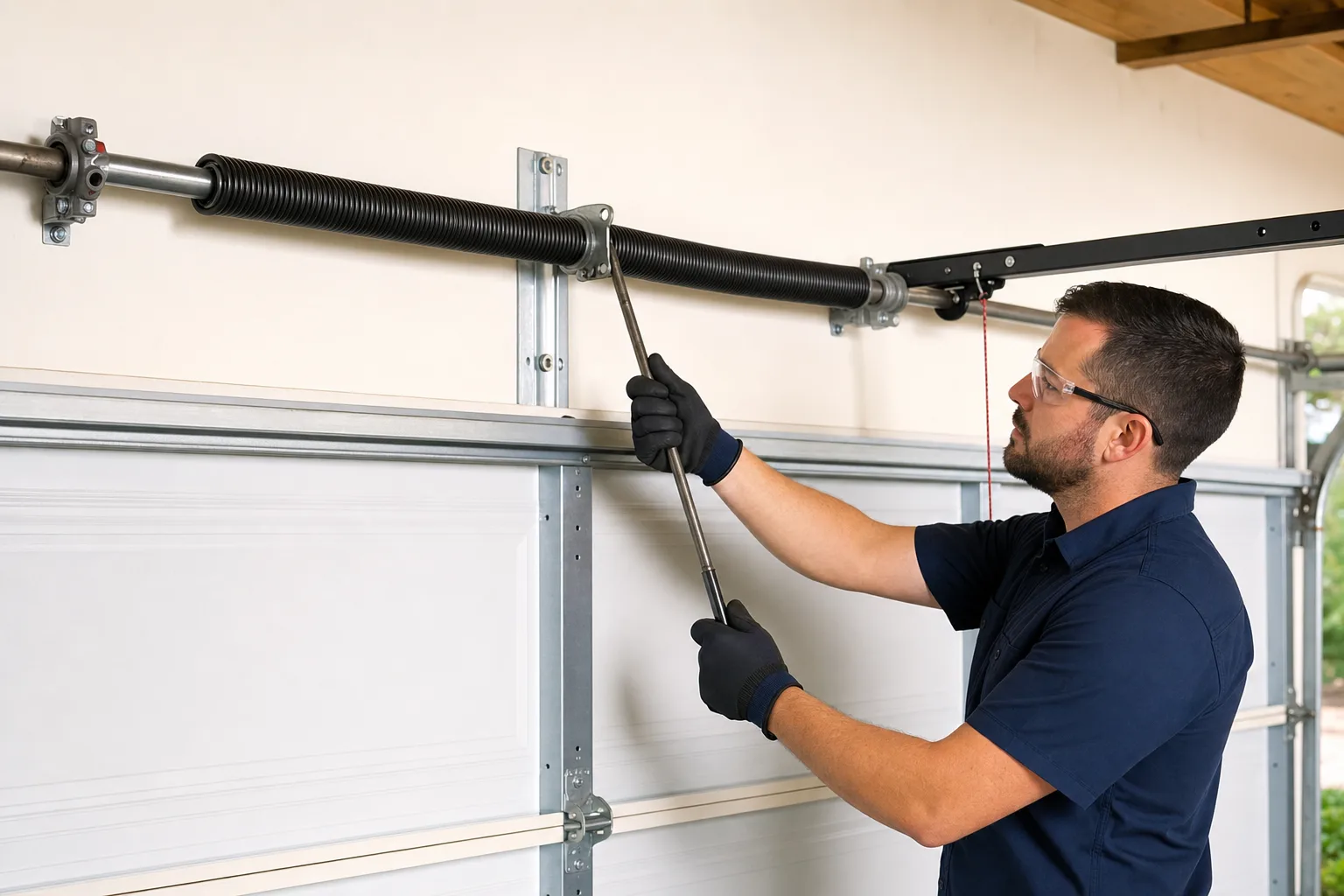
Torsion springs are installed as a matched pair and rated in cycles, and both springs have run every one of those cycles together. When one breaks, its partner is at the end of the same fatigue life — so replacing only the broken one reliably means a second call, a second trip, and a second bill within months.
Springs are rated in cycles, not years
A torsion spring's life is measured in cycles — one full open and close of the door. The standard residential spring is rated for roughly 10,000 of them. How long that lasts depends entirely on how you live: at two cycles a day it is well over a decade, at four it is about seven years, and for a household that uses the garage as the front door — eight or ten cycles a day — the same spring is done in three to four.
That is why the age of the door is the wrong question and how you use it is the right one. Two identical doors on the same street in Davenport can be a decade apart in spring life.
It is also why spring failure feels sudden but is not. Steel fatigues a tiny amount on every cycle, cracks grow from the inside of the coil outward, and the bang in the garage is simply the cycle the crack finished on.
The second spring has done every cycle the first one did
Twin springs go in on the same day, with the same rating, and share the load of every lift after that. When one lets go, the other is not a healthy spare — it is a spring with an identical history that happens to still be in one piece.
Replace just the broken one and you now have a new spring paired with an exhausted one. The old spring fails — months later, sometimes weeks — and the door is back where it started, except you have now paid for two visits.
There is a balance argument too. Springs lose a little of their torque as they age and take a set, so a fresh spring paired with a tired one delivers uneven lift. The door still runs, but the opener works harder than it should and the balance is never quite right.
The arithmetic is labor, not parts
The cost of a spring visit is mostly the visit: getting a technician and a stocked truck to your door, unloading the system safely, winding the new springs, and balancing the door. The steel itself is the smaller share of the bill.
Doing the second spring during the same visit adds a part and a few minutes. Doing it three months later as its own call means paying the labor twice for what could have been one job. That is the entire reason the trade replaces pairs — it is not an upsell, it is arithmetic.
When to spend up on high-cycle springs
Spring life scales with the spring: heavier wire and a longer coil spread the same work across more steel. High-cycle springs rated at 20,000 cycles or more cost modestly more than standard ones — nowhere near double — because, again, most of what you are paying for is the visit.
If your garage door is effectively your front door, high-cycle springs are the best value upgrade on it. If the door moves twice a day, standard springs will outlast most of the hardware around them and the upgrade buys you little. We will tell you which household yours is.
Can you replace just the one broken spring if I ask?
We will explain the arithmetic and the balance problem first, and if the door is scheduled for replacement soon anyway, a single spring can be a defensible stopgap. As a repair meant to last, it is not one — the second failure is already on its way, and we would rather you make the choice knowing that.
How can I tell how much life my springs have left?
You cannot read it off the spring — there is no wear indicator on a coil. What you can do is the math: age in years times cycles per day, against a 10,000-cycle rating. A door that has become heavy on the manual balance test is also telling you the springs are losing tension.
Is it safe to keep using the door with one broken spring?
No. On a two-spring door the survivor is carrying double its designed load, the opener is straining against weight it was never meant to lift, and the door can come down harder than anything else in the house. Leave it closed, skip the release cord, and have it repaired before the next cycle.
Keep reading
More from the blog.
Why your door reverses before closing
Misaligned sensors and drifted force settings account for nearly every reversal. Both are adjustable.
Read the postIs your opener actually broken?
Pull the release and lift the door by hand. What happens next tells you where the fault really is.
Read the postAll garage door services
What we do, what it costs, and how each visit actually goes.
Browse servicesNeed Help With Your Garage Door?
Whether it’s a broken spring, off-track door, faulty opener, or anything in between, our 15+ years of experience allows us to pinpoint the problem fast—offering honest solutions and upfront pricing every time.