Buying
Repair or replace your door?
Springs, rollers, and openers are worth repairing. Cracked panels and rust-through usually are not.
· 6 min read · Garage Doors
The short answer
The short answer
The hardware — springs, cables, rollers, openers — is nearly always worth repairing, because those are wear parts priced as service jobs. The door itself is worth replacing when the structure is going: rust through the steel, cracks across multiple sections, delamination, or damage on a model whose sections are no longer made.
The parts that are almost always worth repairing
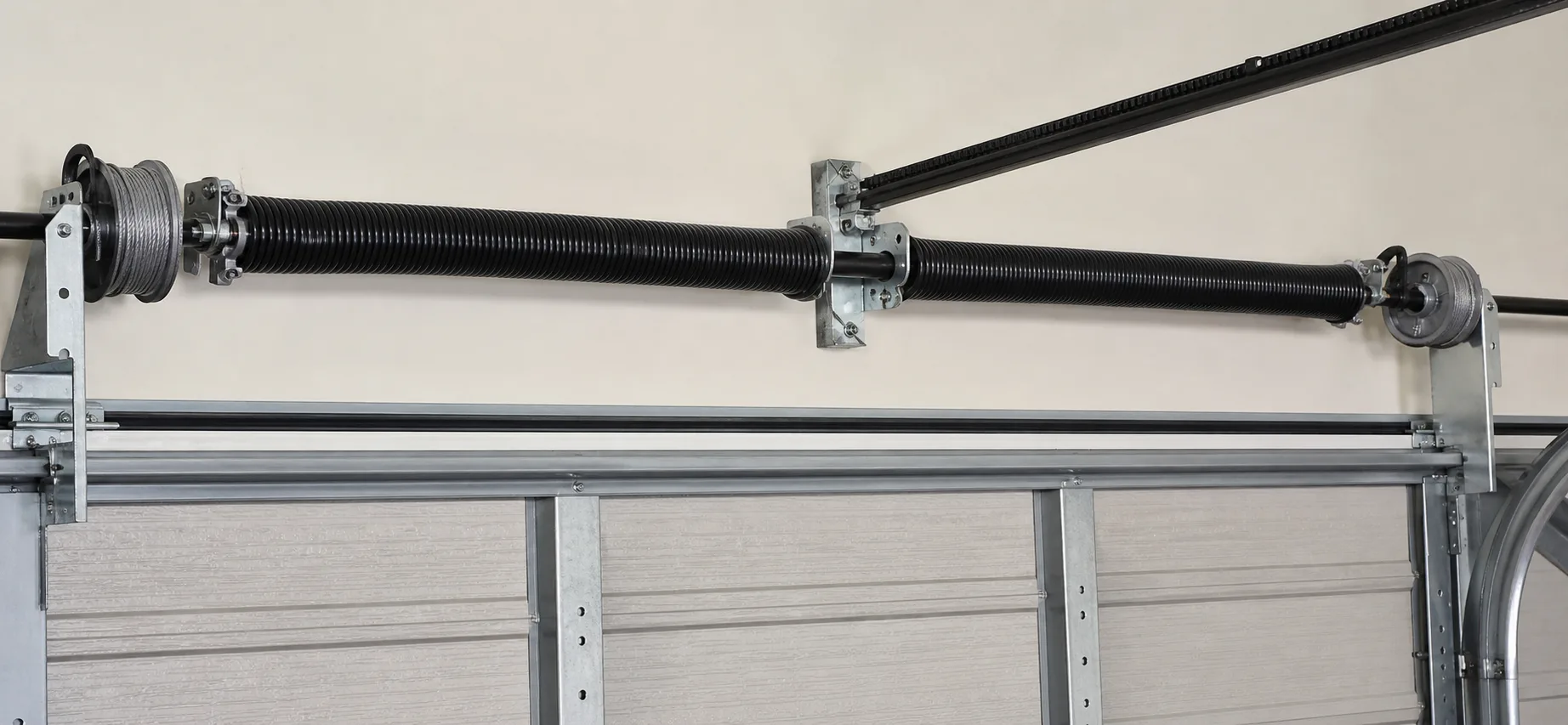
Springs, cables, rollers, and openers are the consumables of a garage door. They are engineered to wear, they are stocked on service trucks, and they are priced as repairs. Replacing a whole door because a spring broke is like replacing a car because it needs tires — the door's structure has decades in it; the hardware never claimed to.
This covers most of what goes wrong. A door that will not lift, reverses, runs crooked, or sounds terrible is almost always a hardware problem, not a dead door.
Panel damage: where the arithmetic starts
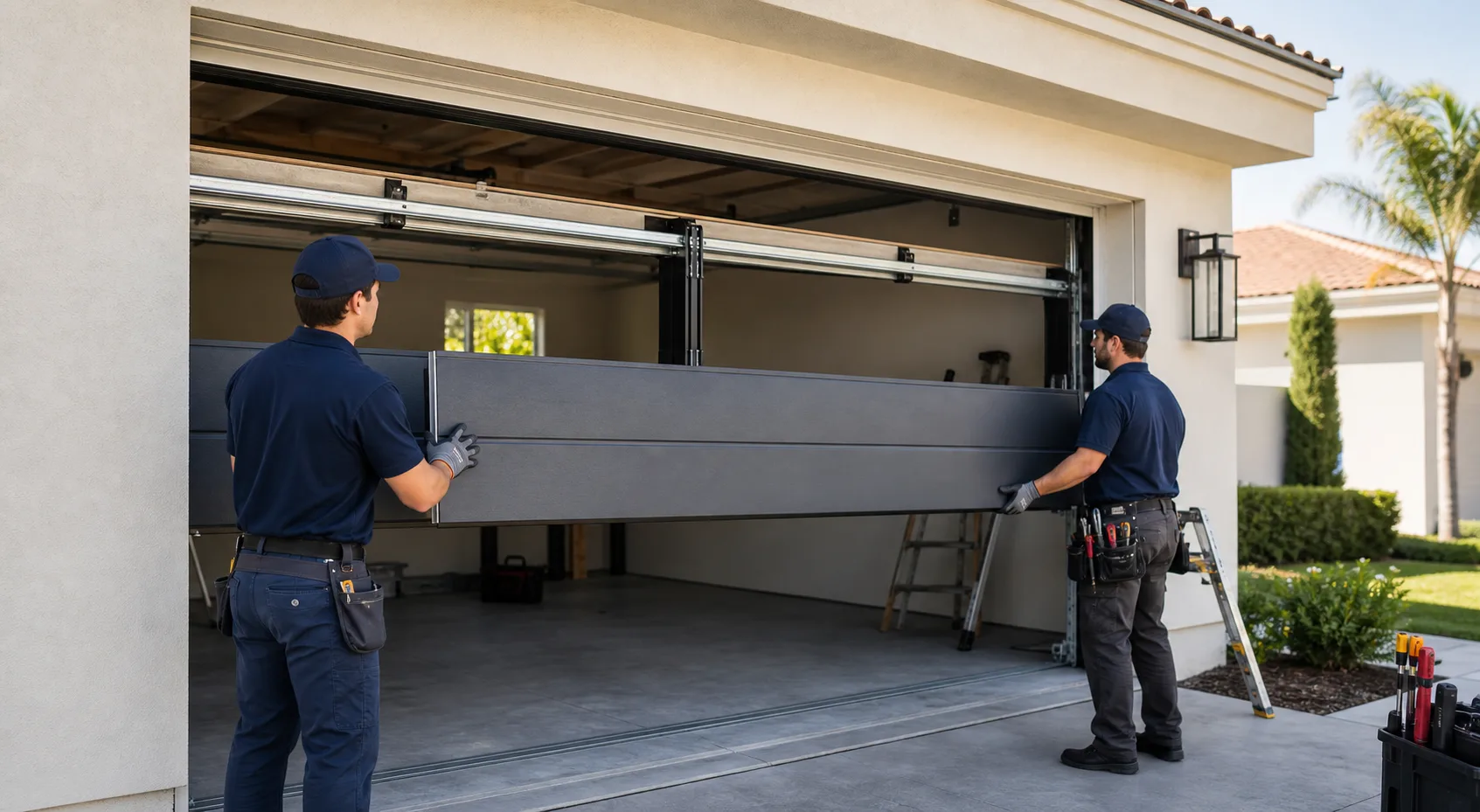
A sectional door is a stack of independent sections, and a single damaged one can be replaced on its own — if the manufacturer still makes it. That is the first question, and it is a genuine fork: current profiles arrive in days, discontinued ones sometimes never.
The economics have a crossover point. One section is clearly a repair. By the time two or three sections are damaged, or the frame has been racked so sections no longer meet squarely, the repair total is approaching a meaningful share of a new door — one that would also bring new hardware, fresh seals, and full spring life with it. We put both numbers in front of you, and the crossover usually makes the decision itself.
What actually condemns a door
Rust through a section is structural, not cosmetic — the steel skin is the section's strength, and once it is perforated at the bottom, where water sits, that section is finished and its neighbors are usually not far behind. Delamination is the same verdict for insulated doors: once the foam core separates from the skins, the stiffness is gone and it does not come back.
A crease across a section — from an impact, or from an unbalanced door slamming — is the third condemner. The section flexes at the crease on every cycle, working the hinges and the sections either side of it. And a wood door that has begun rotting at the joints is past the point where paint counts as a repair.
What a new door buys, honestly
Insulation, if the old door had none: modern sections run from single-digit R-values with polystyrene cores to the mid-teens with polyurethane. That matters on an attached garage — which is most houses in Davenport — and matters less on a detached one, though the insulated door is stiffer and quieter either way. Add new hardware throughout, springs sized to the actual door with their full cycle life ahead of them, and a floor seal that seals.
And the visible thing: the garage door is usually the largest single element on the front of the house. That is a legitimate reason on its own — just not one we will dress up as a mechanical necessity. If your door is sound and you simply want a better-looking one, that is a fine purchase; if your door needs a spring, that is a repair. We will tell you which conversation we are in.
Can I keep my existing opener with a new door?
Usually, if it has working photo-eyes. The springs carry the new door's weight, so a properly balanced new door asks little more of the motor than the old one did. We reset the travel and force limits and re-run the reversal test as part of commissioning.
How long does a garage door last?
The door itself, twenty to thirty years for steel with basic care. The springs are rated in cycles and will be replaced several times within that life, and rollers and cables similarly. Buying a door is buying the frame around a set of consumables.
Is it worth replacing a working door just for insulation?
On an attached garage with living space above or beside it, sometimes — an uninsulated steel skin leaks heat through every shared wall, and the comfort difference in the rooms around it is real. On a detached garage, rarely; the honest gains are stiffness and noise, and a working door usually deserves to keep working.
Keep reading
More from the blog.
Why we replace both springs
Springs are rated in cycles and installed as a pair. Replacing one guarantees a second call.
Read the postWhy your door reverses before closing
Misaligned sensors and drifted force settings account for nearly every reversal. Both are adjustable.
Read the postAll garage door services
What we do, what it costs, and how each visit actually goes.
Browse servicesNeed Help With Your Garage Door?
Whether it’s a broken spring, off-track door, faulty opener, or anything in between, our 15+ years of experience allows us to pinpoint the problem fast—offering honest solutions and upfront pricing every time.