Hardware
The cheapest way to quiet a garage door
Most garage door noise is worn steel rollers. Nylon replacements are the best value fix in the house.
· 4 min read · Garage Doors
The short answer
The short answer
Most garage door noise is worn steel rollers hammering vibration into the track and the framing, and swapping the set for sealed-bearing nylon rollers is one of the cheapest jobs on the door. Lubricating the hinges and springs and tightening the hardware handles most of what is left.
Where the noise actually comes from
A garage door is a steel machine bolted to the wood framing of the house, which makes it a very effective loudspeaker. Steel rollers on steel track transmit every imperfection straight into the track, the brackets, and the studs — which is why the door can be heard from the bedroom above it.
Age makes it worse in two specific ways. Steel rollers wear oval, and an oval wheel thuds once per revolution, all the way up and all the way down. And the open bearings in cheap rollers dry out and grind. Builder-grade doors often ship with plastic-bushing rollers that have no bearings at all — quiet for a year or two, then not.
Why nylon rollers work
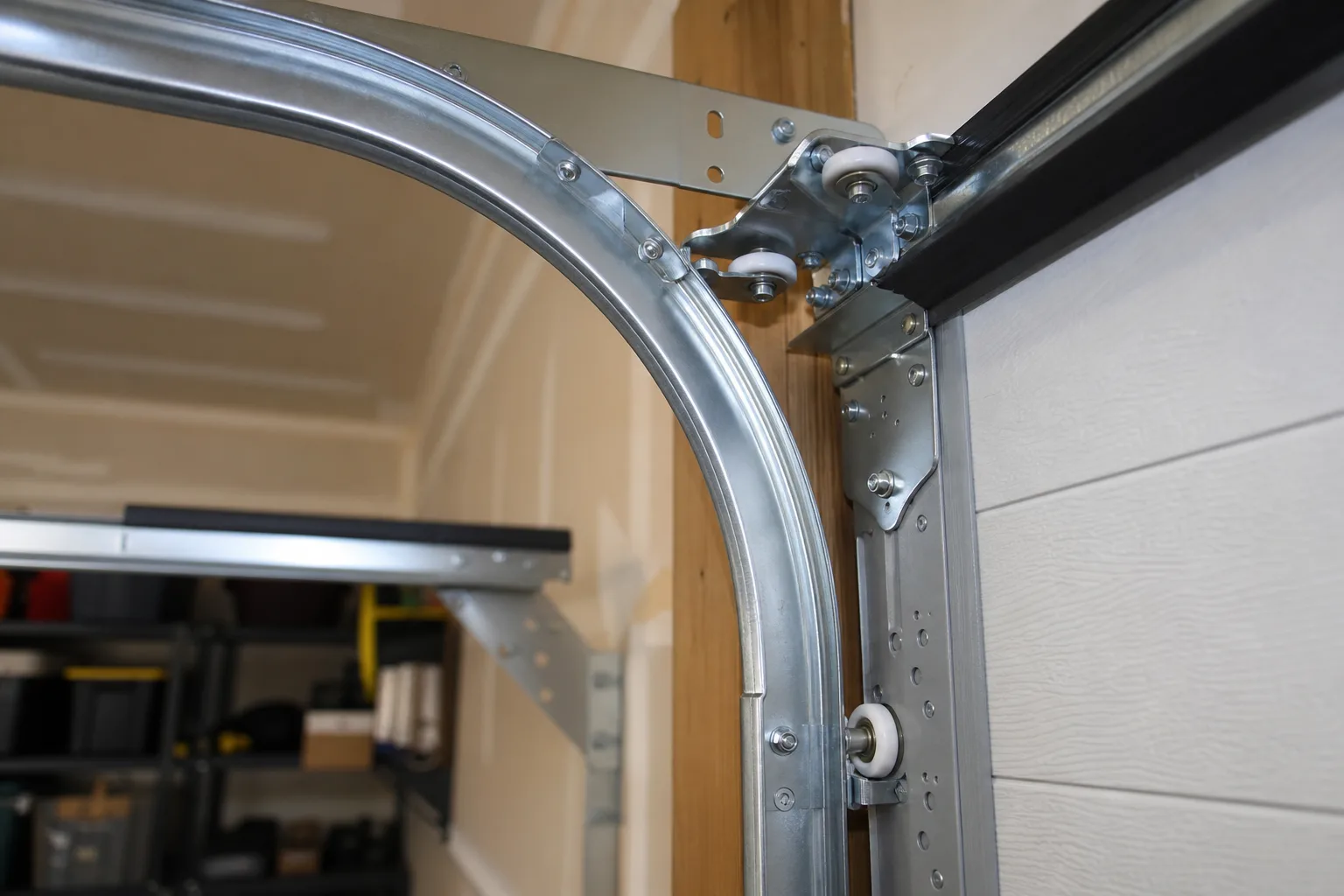
A nylon roller changes the material at the exact point where the noise is made. The nylon tire deadens the metal-on-metal contact, and a sealed ball bearing keeps the wheel spinning true without the constant lubrication open steel bearings need.
The change is not subtle. A full set fitted to an average door takes under an hour, costs less than nearly anything else on the service menu, and turns a rumble the whole house hears into a hum the garage hears. Pound for pound it is the best value fix on the door.
The rest of the quiet checklist
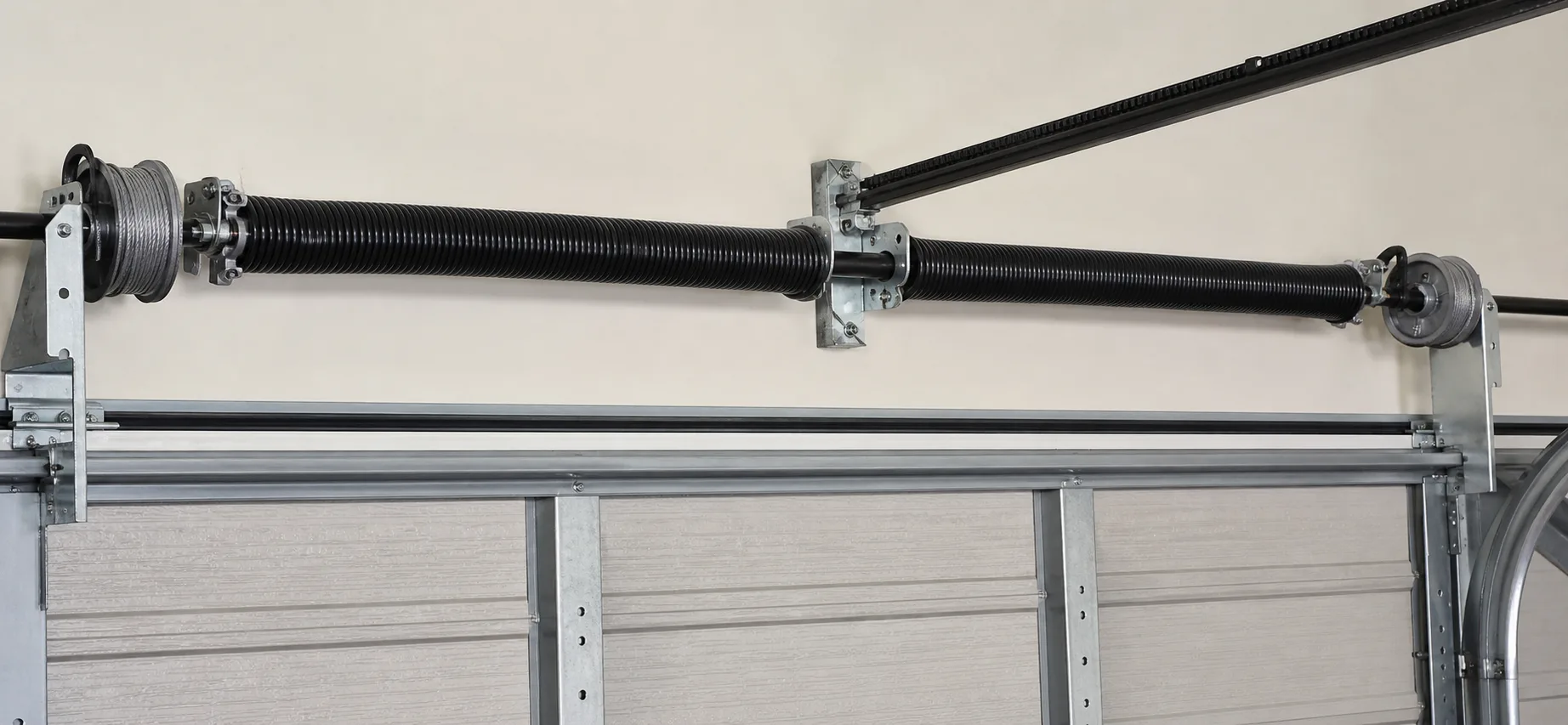
Lubricate the hinges, the springs, and the roller bearings with a garage-door lubricant — a light lithium or silicone spray, not a penetrating oil, which cleans surfaces rather than coating them. A creaking spring in particular quiets down with a single pass along the coil.
Leave the track dry. Rollers are meant to roll on clean steel, and lubricant on the track only collects grit and grinds it into the rollers. Wipe the track clean instead.
Then the fasteners: door hardware works loose with vibration, and every loose hinge screw and track lag is a rattle. A chain drive's tension is worth checking too — a slack chain slaps its rail on every start and stop. If the opener itself is the noise, rubber isolation pads between its mounting brackets and the joists stop the ceiling acting as a sounding board.
The noise that is not a nuisance
Some sounds are information. A bang from the garage is a spring letting go. A scraping or popping that started suddenly can be a cable fraying at the bottom bracket or a roller leaving the track. A door that got loud overnight is different from a door that got loud over five years.
The five-year rumble wants rollers and lubricant. The overnight noise wants an inspection before the next cycle — it is usually cheap to fix at the noisy stage and considerably less cheap a week later.
What lubricant should I use on a garage door?
A garage-door-specific lithium or silicone spray, on hinges, springs, and roller bearings, once or twice a year. Not a penetrating oil — that is a cleaner, and it strips what lubrication is there — and never grease on the track, which should stay clean and dry.
Can I fit nylon rollers myself?
The rollers along the middle of a closed door, carefully, one hinge at a time — yes. The bottom rollers, no: they sit in the bottom brackets, which anchor the lift cables under the springs' full tension. That is the firm line between a DIY job and a service call.
I replaced the rollers and the door is still loud. What now?
Then the noise is coming from somewhere else in the chain: dry spring coils, loose hardware, a slack chain, or the opener drumming through its mounts. Work through them in that order — or have us listen to it once. A noisy door usually names its problem to someone who has heard a few hundred of them.
Keep reading
More from the blog.
Why we replace both springs
Springs are rated in cycles and installed as a pair. Replacing one guarantees a second call.
Read the postWhy your door reverses before closing
Misaligned sensors and drifted force settings account for nearly every reversal. Both are adjustable.
Read the postAll garage door services
What we do, what it costs, and how each visit actually goes.
Browse servicesNeed Help With Your Garage Door?
Whether it’s a broken spring, off-track door, faulty opener, or anything in between, our 15+ years of experience allows us to pinpoint the problem fast—offering honest solutions and upfront pricing every time.